Affiliate Disclosure: Some links on this page are affiliate links. When you click on these links and make a purchase, we may receive a commission at no additional cost to you. This helps support our platform. Our recommendations are based on quality and value, not commission rates. Learn more
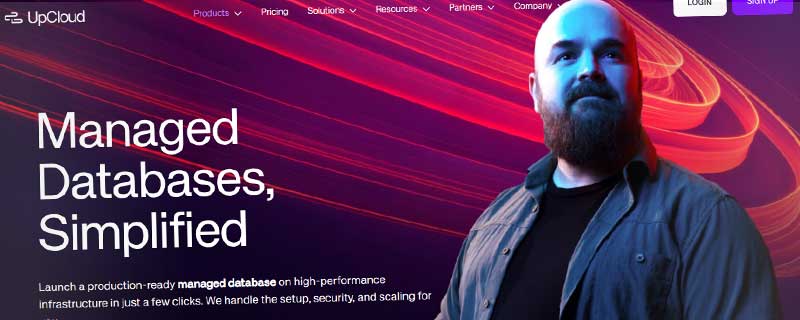
UpCloud Managed Databases
FeaturedVerifiedFully managed MySQL, PostgreSQL, Valkey, and OpenSearch databases with automated backups, 99.999% SLA, and high availability from €8/month.

UpCloud
This resource is developed by UpCloud
• 4 resources available
About UpCloud Managed Databases
UpCloud Managed Databases delivers fully managed relational and NoSQL database services built on the same high-performance MaxIOPS storage infrastructure that powers UpCloud Cloud Servers. Launched as an evolution of the company's cloud platform, Managed Databases eliminates the operational overhead of database administration while maintaining the performance excellence UpCloud is known for.
The service supports MySQL, PostgreSQL, Valkey (Redis fork), and OpenSearch, covering the most critical database technologies for modern applications. This comprehensive engine support allows development teams to standardize on a single managed database provider rather than juggling multiple services.
Supported Database Engines
UpCloud maintains current versions across all database engines with regular updates:
- PostgreSQL — Versions 12, 13, 14, 15, 16, 17 with pgvector extension for AI/ML workloads
- MySQL — Versions 8.0.x with InnoDB and MyRocks storage engines
- Valkey — Version 7.2.5+ (community-driven Redis fork after license change)
- OpenSearch — Versions 1.x and 2.x for full-text search and analytics
Each engine receives security patches and minor version updates automatically during maintenance windows, while major version upgrades require explicit customer action to prevent unexpected compatibility issues.
Architecture and High Availability
UpCloud Managed Databases employs a clustered architecture with automatic failover for business-critical plans. This configuration includes primary nodes for write operations and hot standby replicas that continuously synchronize data.
High-availability features:
- Automatic failover within 60-90 seconds of primary failure detection
- Synchronous replication for zero data loss (RPO = 0)
- Read replicas for scaling read-intensive workloads
- Multi-zone deployment options for enhanced resilience
Single-node plans provide cost-effective options for development and non-critical workloads, with straightforward upgrade paths to high-availability clusters when requirements evolve.
Performance: MaxIOPS Storage
The fundamental performance advantage of UpCloud Managed Databases stems from MaxIOPS storage delivering up to 100,000 IOPS. This storage technology eliminates the I/O bottlenecks that plague databases on traditional cloud storage.
For transactional workloads requiring rapid write confirmation, MaxIOPS provides consistent low-latency responses even under sustained load. Analytics queries benefit from parallel read capabilities, reducing query execution times substantially compared to standard SSD storage.
Plans and Pricing
UpCloud structures database plans around compute resources (vCPU and RAM) rather than confusing capacity-based pricing models. All plans include MaxIOPS storage, automated backups, and network egress at no additional cost.
Startup Plans (Single Node):
- 1 vCPU, 2GB RAM, 25GB storage — €17/month
- 1 vCPU, 4GB RAM, 80GB storage — €32/month
- 2 vCPU, 6GB RAM, 160GB storage — €56/month
Business Plans (3-Node HA Cluster):
- 2 vCPU, 6GB RAM, 160GB storage — €166/month
- 4 vCPU, 16GB RAM, 320GB storage — €445/month
- 8 vCPU, 32GB RAM, 640GB storage — €885/month
Premium Plans (3-Node HA Cluster):
- 12 vCPU, 64GB RAM, 960GB storage — €1,510/month
- 16 vCPU, 96GB RAM, 1280GB storage — €2,145/month
- 24 vCPU, 128GB RAM, 1920GB storage — €2,968/month
Storage scales from 25GB to 1920GB depending on the selected plan, with automatic expansion available through plan upgrades without requiring downtime or manual migration.
Zero-Cost Data Transfer
Following UpCloud's broader pricing philosophy, Managed Databases includes unlimited outbound data transfer at no additional cost. This eliminates a significant cost variable that makes other managed database providers expensive for data-intensive applications.
For applications serving dynamic content, APIs returning JSON payloads, or analytics dashboards querying databases frequently, zero-egress pricing provides substantial cost savings compared to AWS RDS, Google Cloud SQL, or Azure Database services that charge $0.08-$0.12 per GB transferred.
Automated Backups and Point-in-Time Recovery
Every managed database includes automated daily backups with configurable retention periods. Backups execute during low-traffic windows to minimize performance impact, creating consistent snapshots of your entire database.
Backup retention options:
- Day Plan — 24 hours (included free)
- Week Plan — 7 days retention
- Month Plan — 4 weeks retention
- Year Plan — 12 months retention
Point-in-time recovery (PITR) leverages continuous transaction log archiving to restore databases to any specific moment within the retention window. This capability proves invaluable when recovering from application bugs, data corruption, or user errors that aren't immediately detected.
Security and Compliance
Database security operates at multiple layers. Network isolation through private VPCs ensures databases remain inaccessible from the public internet unless explicitly configured otherwise. Connection security enforces TLS/SSL encryption for all client connections, preventing credential exposure or data interception.
Security features:
- Encryption-at-rest for all database storage volumes
- Mandatory TLS/SSL for client connections
- IP whitelist filtering for connection access control
- Integration with UpCloud firewall rules
- Automated security patching for database engines
UpCloud maintains ISO 27001 certification for information security management, and European data centers ensure GDPR compliance for businesses handling EU citizen data.
Monitoring and Performance Insights
The UpCloud Hub control panel provides comprehensive database monitoring without requiring third-party APM tools. Real-time metrics display CPU utilization, memory consumption, disk I/O patterns, and active connection counts.
Available metrics:
- Query performance statistics
- Slow query identification
- Connection pool utilization
- Replication lag monitoring
- Storage capacity forecasting
Alerting integrations notify teams when predefined thresholds exceed acceptable ranges, enabling proactive intervention before performance degradation affects end users.
Connection Pooling
UpCloud includes integrated connection pooling through PgBouncer (PostgreSQL) and ProxySQL (MySQL), reducing connection overhead and improving application scalability. Connection pooling sits between applications and the database, efficiently managing connection reuse.
For applications opening frequent short-lived connections, pooling reduces latency by eliminating repeated TCP handshakes and authentication exchanges. This proves particularly beneficial for serverless functions and microservices architectures where connection establishment represents significant overhead.
Read Replicas
High-availability plans support dedicated read replicas for distributing read-heavy workloads across multiple database nodes. Applications direct SELECT queries to read replicas while write operations target the primary node, achieving horizontal read scaling.
Read replicas synchronize asynchronously from the primary, introducing minimal replication lag (typically under 1 second). For analytics queries or reporting dashboards where absolute consistency isn't critical, read replicas offload substantial work from primary nodes.
Migration Services
UpCloud simplifies database migrations through multiple approaches. For MySQL and PostgreSQL, logical dump-and-restore using standard tools (mysqldump, pg_dump) works effectively for databases under 100GB.
Migration methods:
- Logical dump/restore for smaller databases
- Continuous replication for zero-downtime migrations
- Database Migration Service (DMS) for AWS RDS migrations
- Expert migration assistance for complex scenarios
The platform's support team provides migration guidance, and for large enterprise migrations, professional services ensure smooth transitions with minimal application downtime.
Maintenance Windows
Routine maintenance executes during configurable weekly windows where the platform applies security patches, performs minor version updates, and conducts infrastructure improvements. For high-availability clusters, maintenance operates in rolling fashion across nodes to maintain database availability.
Customers define preferred maintenance schedules aligned with low-traffic periods. Emergency security patches deploy outside maintenance windows when critical vulnerabilities require immediate remediation.
PostgreSQL Extensions
UpCloud's PostgreSQL implementation includes popular extensions that enhance database capabilities:
- pgvector — Vector similarity search for AI/ML embeddings
- PostGIS — Geospatial data processing
- TimescaleDB — Time-series data optimization
- pg_stat_statements — Query performance analysis
- uuid-ossp — UUID generation
This extension support enables advanced use cases without requiring custom PostgreSQL builds or self-managed installations.
API and Automation
The UpCloud API exposes complete database lifecycle management capabilities. Infrastructure-as-code practitioners leverage the official Terraform provider to codify database configurations alongside compute and networking resources.
API endpoints support database creation, modification, backup management, and metrics retrieval. Combined with webhook notifications for database events, teams build automated workflows that respond to capacity issues or failover events.
Geographic Availability
Managed Databases deploys across UpCloud's global data center network, with particularly strong coverage in Europe. Available regions include:
Europe: Helsinki, Stockholm, London, Frankfurt, Amsterdam, Madrid, Warsaw
Americas: New York, Chicago, San Jose
Asia-Pacific: Singapore, Sydney
Selecting database regions close to application servers minimizes network latency, reducing query response times and improving overall application performance.
Support and SLA
UpCloud provides 24/7/365 support with average response times under 46 seconds for all customers. Database-specific support includes query optimization recommendations, failover troubleshooting, and configuration guidance from engineers experienced with production database workloads.
Business and Premium plans include 99.99% uptime SLA guarantees, translating to less than 53 minutes of permissible downtime annually. This SLA covers both planned maintenance and unplanned outages.
Use Cases
UpCloud Managed Databases serves diverse application requirements:
- SaaS applications — High-availability PostgreSQL for multi-tenant architectures
- E-commerce platforms — Fast transaction processing with MaxIOPS storage
- Content management — Reliable MySQL for WordPress and content platforms
- Real-time analytics — OpenSearch for log aggregation and search
- Caching layers — Valkey for session storage and application caching
- AI/ML workloads — PostgreSQL with pgvector for embedding storage
Competitive Advantages
UpCloud Managed Databases differentiates through superior I/O performance via MaxIOPS storage, transparent pricing with zero egress fees, and European data center concentration for GDPR compliance. The service competes favorably against AWS RDS, Google Cloud SQL, and Azure Database services while offering more predictable costs and faster storage performance at comparable price points.
ℹ️ Information Accuracy Notice
While we strive to keep all information about this resource accurate and up-to-date, details such as pricing, features, and availability may change. We encourage you to always verify the information directly on the official website before making any decisions or purchases. Our goal is to help you discover great tools, not to misrepresent any products or services.
UpCloud Managed Databases Features
Detailed specifications and capabilities of this resource.
Database Types
Database Version
Storage
Storage Type
RAM
CPU Cores
Connections Limit
Backups
Point-in-Time Recovery
Replication
High Availability
Monitoring Tools
Query Analytics
SSL/TLS
VPC/Private Network
IP Whitelisting
Data Center Locations
Scalability
API Access
CLI Tools
Expert Rating
Expert rating based on features, performance, and value
Pros & Cons
Pros
Cons
Do you recommend UpCloud Managed Databases?
Related Resources

PlanetScale
Serverless MySQL platform built on Vitess with database branching, non-blocking schema changes, automatic scaling, and pay-per-use pricing. Git-like workflow for database development.

Supabase
Open-source Firebase alternative built on PostgreSQL with auto-generated APIs, real-time subscriptions, authentication, storage, and Edge Functions. Self-hostable with full SQL access.

Kinsta Database Hosting
Fully managed MySQL, PostgreSQL, and Redis database hosting with automatic backups
Resource Information
- Category
- Database Hosting
- Brand
- UpCloud
- Pricing
- PAID
- Last Updated
- 2026-01-13Recently