Affiliate Disclosure: Some links on this page are affiliate links. When you click on these links and make a purchase, we may receive a commission at no additional cost to you. This helps support our platform. Our recommendations are based on quality and value, not commission rates. Learn more
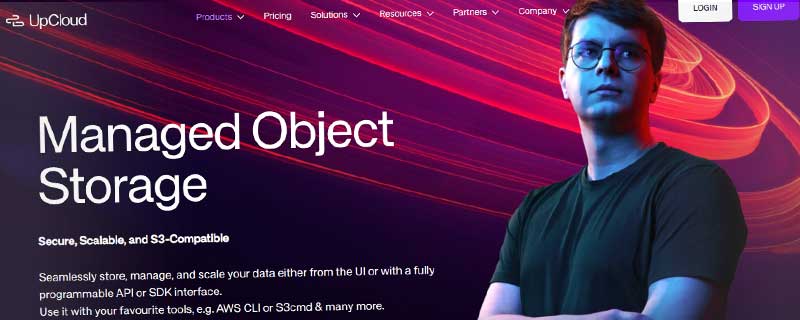
UpCloud Object Storage
FeaturedVerifiedS3-compatible object storage with automatic scaling, zero-egress bandwidth, and 11-nines durability from €5/month for 250GB.

UpCloud
This resource is developed by UpCloud
• 4 resources available
About UpCloud Object Storage
UpCloud Object Storage delivers S3-compatible object storage for scalable, durable data storage without the complexity of managing storage infrastructure. Built on Ceph open-source storage technology, the service provides industry-standard APIs that integrate seamlessly with existing applications and tools designed for Amazon S3.
The platform focuses on simplicity and reliability with transparent pricing, European data residency options, and the same zero-egress bandwidth policy that defines UpCloud's broader service philosophy.
S3 Compatibility
UpCloud Object Storage implements the Amazon S3 API specification, ensuring compatibility with thousands of applications, frameworks, and tools that support S3 storage. This compatibility extends to popular SDKs including AWS SDK for Python (Boto3), AWS SDK for JavaScript, AWS CLI, and virtually any library supporting S3-compatible endpoints.
Supported S3 operations:
- Bucket creation, deletion, and listing
- Object upload (PUT), download (GET), and deletion
- Multipart uploads for large files
- Pre-signed URLs for temporary access
- Object metadata and tagging
- Bucket policies and ACLs for access control
Applications migrate from AWS S3 by simply changing the endpoint URL and access credentials — no code changes required for most standard S3 operations.
Architecture and Durability
Object Storage leverages Ceph distributed storage with data replication across multiple storage nodes. This architecture provides eleven nines (99.999999999%) of data durability, ensuring data loss remains exceptionally unlikely even during hardware failures.
Data replication occurs automatically and transparently. When you upload an object, UpCloud creates multiple copies distributed across independent storage nodes within the same data center, protecting against drive failures, node failures, or other infrastructure issues.
Pricing Structure
UpCloud Object Storage employs straightforward capacity-based pricing without complicated tier structures or API request charges. You pay only for storage consumed, measured in gigabytes stored monthly.
Current pricing:
- €0.013/GB per month (approximately $0.014/GB)
- No charges for PUT, GET, DELETE, or LIST operations
- Zero egress fees for data downloads
- No per-bucket charges
- No minimum storage commitments
For context, AWS S3 Standard charges $0.023/GB monthly plus $0.09/GB egress fees. UpCloud's pricing represents roughly 40% of AWS costs before accounting for egress, with even greater savings for bandwidth-heavy workloads.
Zero-Cost Data Transfer
Following UpCloud's pricing philosophy, Object Storage includes unlimited outbound data transfer at no additional cost. This eliminates the egress fees that make AWS S3, Google Cloud Storage, and Azure Blob Storage expensive for content delivery, backup retrieval, or media streaming.
For applications serving images, videos, software downloads, or any bandwidth-intensive content, zero-egress pricing provides immediate and substantial cost advantages. There's no need to architect complex caching layers or CDN integrations solely to minimize transfer fees.
Storage Locations
UpCloud Object Storage deploys across multiple European data centers, with plans to expand to additional regions globally. Available locations include:
Current regions: Helsinki (Finland), Amsterdam (Netherlands), Frankfurt (Germany)
Choosing storage locations close to your applications or users minimizes latency for object access. For GDPR compliance requirements, European storage locations ensure data sovereignty within the EU.
Buckets and Objects
Object Storage organizes data into buckets — logical containers similar to top-level directories. Each bucket contains unlimited objects up to 5TB per individual object. Bucket names must be globally unique across the entire UpCloud platform.
Bucket features:
- Unlimited objects per bucket
- Objects from 0 bytes to 5TB
- Flat namespace (no actual folders, but prefixes simulate hierarchy)
- Versioning support for object history
- Lifecycle policies for automated data management
Access Control
UpCloud Object Storage provides multiple mechanisms for controlling access to buckets and objects. Access keys (Access Key ID and Secret Access Key) authenticate API requests, similar to AWS IAM credentials.
Access control methods:
- Bucket policies using JSON policy documents
- Access Control Lists (ACLs) for object-level permissions
- Pre-signed URLs for temporary public access
- Private by default (no public access without explicit grants)
Bucket policies define permissions using familiar AWS policy syntax, enabling granular control over who can read, write, or delete objects.
Data Security
Security operates at multiple layers. TLS/SSL encryption protects data in transit between clients and UpCloud storage infrastructure. All API requests require HTTPS connections by default, preventing credential interception or data exposure.
Security features:
- Encryption in transit via HTTPS/TLS
- Encryption at rest (transparent to applications)
- Access key rotation capabilities
- IP whitelist restrictions (coming soon)
- Audit logging for object access
For compliance requirements, UpCloud maintains ISO 27001 certification and adheres to GDPR regulations for European data centers.
Versioning
Bucket versioning enables automatic preservation of object history, protecting against accidental deletion or overwrites. When versioning is enabled, each object modification creates a new version rather than replacing the current object.
This capability proves invaluable for compliance requirements, audit trails, or recovering from application bugs that corrupt data. You retrieve any historical version explicitly, or delete specific versions to reclaim storage space.
Lifecycle Policies
Lifecycle policies automate data management by defining rules that transition or expire objects based on age or version. These policies reduce storage costs by automatically removing temporary files, old backups, or obsolete data.
Lifecycle actions:
- Automatic deletion of objects after specified days
- Expiration of specific object versions
- Abort incomplete multipart uploads
- Archive rules for compliance retention
Performance
UpCloud Object Storage delivers consistent throughput for both upload and download operations. Single-object transfers achieve hundreds of megabits per second, while parallelizing operations across multiple objects enables gigabit-scale aggregate throughput.
For large files, multipart upload capabilities split objects into chunks uploaded concurrently, maximizing upload speeds and enabling resume functionality for unreliable connections.
Integration and Tools
The S3-compatible API ensures broad tool compatibility. Popular applications and utilities work without modification:
- AWS CLI — Configure with custom endpoint for complete S3 command support
- s3cmd — Open-source S3 client with full UpCloud compatibility
- rclone — Versatile sync tool supporting UpCloud Object Storage
- Cyberduck — Desktop GUI client for file management
- Duplicati — Backup software with native S3 support
Software development kits (SDKs) in Python, JavaScript, Ruby, PHP, Go, and Java integrate UpCloud Object Storage into applications seamlessly.
Content Delivery
While UpCloud Object Storage doesn't include integrated CDN capabilities, buckets can serve content directly via HTTPS URLs. For global content delivery, integrate with third-party CDNs like Cloudflare or BunnyCDN using UpCloud Object Storage as the origin.
Zero-egress pricing makes CDN integration economically attractive since traffic from Object Storage to CDN edge nodes incurs no charges.
Backup and Archive Use Cases
Object Storage excels as a backup target for databases, file servers, and application data. The combination of durability, versioning, and lifecycle policies creates robust backup solutions without managing tape libraries or complex storage arrays.
Common backup integrations include:
- Velero for Kubernetes backup
- pg_dump piped to S3 for PostgreSQL backups
- mysqldump to Object Storage for MySQL backups
- Restic for encrypted incremental backups
- Veeam Backup with S3-compatible targets
Static Website Hosting
Buckets support static website hosting configuration, serving HTML, CSS, JavaScript, and media files directly from Object Storage. This capability enables hosting single-page applications, documentation sites, or landing pages without dedicated web servers.
Configure index documents and error pages, then point DNS records to bucket endpoints for complete static site deployments.
Media Storage and Streaming
For applications managing user-generated content, Object Storage provides scalable, cost-effective media storage. Store images, videos, documents, and audio files with straightforward access via HTTPS URLs.
Video streaming applications leverage Object Storage as the media origin, with CDNs providing global distribution. Zero-egress pricing eliminates concerns about viral content suddenly generating massive transfer bills.
Data Lake and Analytics
Object Storage serves as a cost-effective foundation for data lakes, storing raw log files, analytics datasets, or machine learning training data. S3 compatibility ensures seamless integration with data processing frameworks like Apache Spark, Presto, or Trino.
For organizations building analytics pipelines, UpCloud Object Storage combined with compute resources provides complete infrastructure for data engineering workflows.
Migration from AWS S3
Migrating existing S3-based applications to UpCloud Object Storage requires minimal effort. Update endpoint URLs from s3.amazonaws.com to UpCloud's regional endpoints, rotate credentials, and transfer data using tools like rclone or AWS CLI sync.
For large-scale migrations measured in terabytes, consider parallel transfer jobs to maximize throughput and minimize migration duration.
Management Interface
The UpCloud Hub control panel provides web-based object storage management, enabling bucket creation, object uploads, and permission configuration without command-line tools. For routine operations, the web interface offers convenient access to storage resources.
API and Automation
Beyond S3 API compatibility, UpCloud provides native REST APIs for object storage lifecycle management. Infrastructure-as-code practitioners use Terraform provider support to codify bucket configurations, access keys, and policies alongside compute resources.
Support and SLA
UpCloud provides 24/7/365 support for Object Storage with the same sub-minute average response times offered across all services. The platform targets 99.9% availability for object storage operations, with durability guarantees of 99.999999999%.
Competitive Advantages
UpCloud Object Storage differentiates through transparent pricing without hidden fees, zero-cost egress bandwidth, and European data center options for GDPR compliance. The service undercuts AWS S3, Google Cloud Storage, and Azure Blob Storage on total cost of ownership, particularly for bandwidth-intensive workloads where egress fees typically dominate storage bills.
ℹ️ Information Accuracy Notice
While we strive to keep all information about this resource accurate and up-to-date, details such as pricing, features, and availability may change. We encourage you to always verify the information directly on the official website before making any decisions or purchases. Our goal is to help you discover great tools, not to misrepresent any products or services.
UpCloud Object Storage Features
Detailed specifications and capabilities of this resource.
Storage
Storage Type
Bandwidth
Scalability
Load Balancing
High Availability
CDN Included
Backups
Snapshot Support
Server Locations
Root Access
Auto Scaling
API Access
Security Features
Migration Support
Billing Flexibility
Intro Price
Renewal Price
Support Options
Support Level
Expert Rating
Expert rating based on features, performance, and value
Pros & Cons
Pros
Cons
Do you recommend UpCloud Object Storage?
Related Resources

AWS EC2
Secure and resizable cloud compute with 1,000+ instance types, auto-scaling, and enterprise-grade reliability

Vercel Hosting
Leading frontend cloud platform for Next.js, React, Vue deployments with zero-configuration, global edge network, automatic scaling, and serverless functions. Created by Next.js team.
Kinsta Application Hosting
Modern cloud hosting platform for web applications with automatic scaling
Resource Information
- Category
- Cloud Hosting
- Brand
- UpCloud
- Pricing
- PAID
- Last Updated
- 2026-01-13Recently